
Service 04 · Deep foundations
Helical piles
A helical pile is a steel shaft with one or more helix-shaped bearing plates that is turned into the ground with a hydraulic torque motor, like a screw. It can carry load as soon as it is installed: there is no concrete to cure and no spoil to haul.
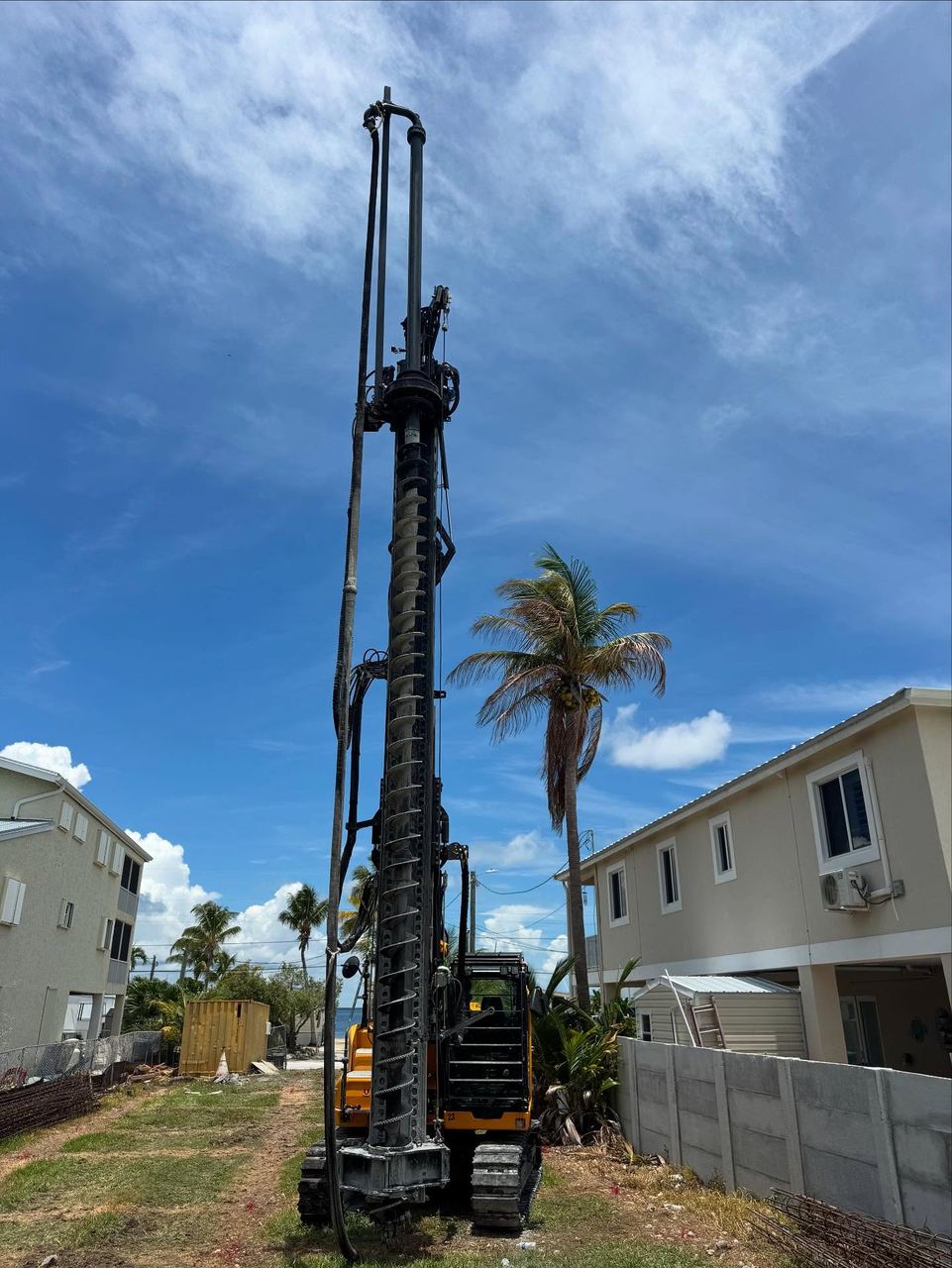
How is a helical pile installed?
- The pile locations are laid out from the plans.
- The lead section, which carries the helix plates, is attached to a hydraulic torque motor.
- The pile is turned into the ground at a steady rate, with extension sections added until it reaches the design depth and torque.
- Installation torque is monitored and recorded as a check against the design capacity.
- A cap or bracket connects the pile to the structure as the plans show.
When are helical piles used?
They are often used for lighter structures and additions, for tension and uplift loads, for repairs and underpinning of existing foundations, and on sites where a large rig, noise or spoil would be a problem.
Their use and capacity are set by the engineer of record, usually with a manufacturer’s code-evaluated helical pile system.
How is a helical pile’s capacity checked?
The torque needed to turn the pile relates to the resistance of the soil around the helix plates. Engineers use a torque-to-capacity relationship from the manufacturer’s evaluation and, where the design calls for it, load tests to confirm capacity.
What do we need to quote helical piles?
- The foundation plans and the pile or hole schedule (number, diameter and depth).
- The geotechnical report with its boring logs, if there is one.
- The job site city or ZIP, and anything that limits access: overhead lines, neighbors, room for the rig and trucks.
- When you need us on site.
Frequently asked questions
Can helical piles be loaded right after installation?
Yes. There is no concrete or grout to cure, so a helical pile can carry load as soon as it is installed and connected, as the design allows.
Do helical piles work in Miami limestone?
It depends on the ground. The helix plates have to advance through soil, and hard rock layers can stop them short. Whether helical piles suit a site is the engineer’s call, based on the borings.
Who designs helical piles?
The engineer of record, usually using the pile manufacturer’s evaluated system data for capacities and installation torque.