
Service 02 · Deep foundations
Drilled shafts
A drilled shaft is a reinforced concrete column cast in a hole that is bored first and held open until the concrete goes in. It is also called a caisson or a bored pile.
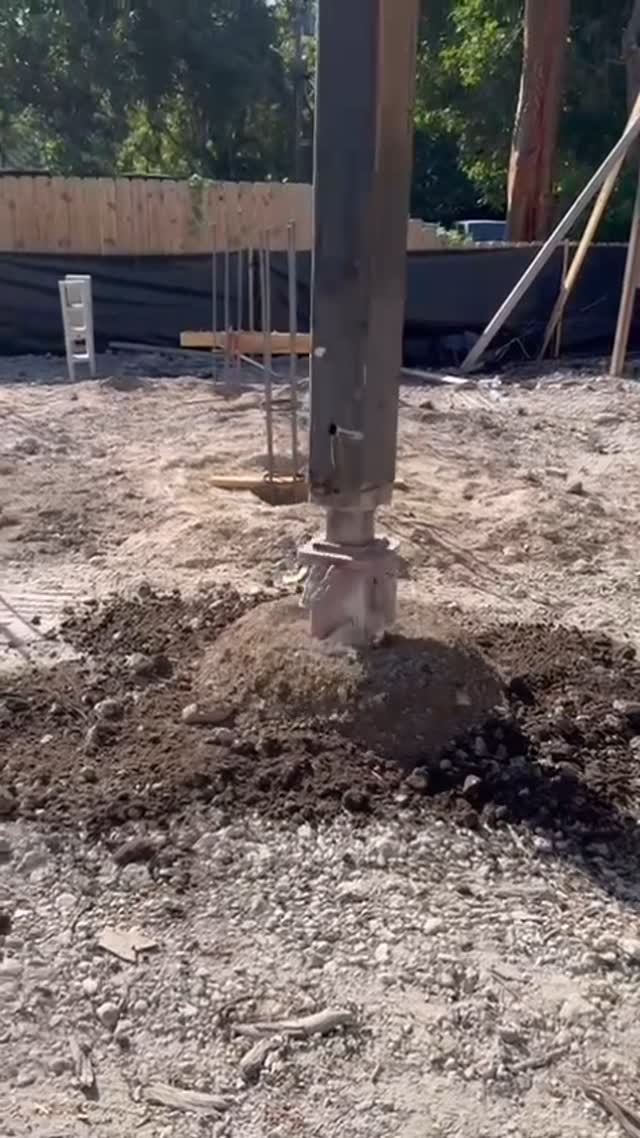
How is a drilled shaft built?
- The rig sets up over the shaft location from the layout.
- The hole is bored with an auger or a bucket to the diameter and depth on the plans.
- In ground that could cave, or below the water table, the hole is held open with steel casing, drilling slurry or both.
- The bottom is cleaned and the steel cage is lowered into the open hole.
- Concrete is placed from the bottom up. When there is water or slurry in the hole, it goes in through a tremie pipe or pump line so the concrete pushes the fluid up and out instead of mixing with it.
When are drilled shafts used?
Drilled shafts are usually larger in diameter than auger cast piles. They are often used where a single foundation must carry a heavy column load or large lateral loads, or needs to be socketed into rock.
The geotechnical engineer recommends the foundation type from the site investigation, and the structural engineer of record designs the shafts shown on the plans.
Drilled shafts below the water table
In much of Miami-Dade the water table is close to the surface, so the lower part of the hole is below water. Crews typically hold the hole open with casing, slurry or both, set the cage, and place the concrete through a tremie from the bottom up so it displaces the water or slurry.
What do we need to quote drilled shafts?
- The foundation plans and the pile or hole schedule (number, diameter and depth).
- The geotechnical report with its boring logs, if there is one.
- The job site city or ZIP, and anything that limits access: overhead lines, neighbors, room for the rig and trucks.
- When you need us on site.
Frequently asked questions
Is a drilled shaft the same as a caisson?
In US practice the terms drilled shaft, caisson and bored pile are commonly used for the same thing: a reinforced concrete foundation cast in a bored hole.
Do drilled shafts always need casing?
No. In stable ground above the water table a shaft can often be drilled without support. Casing or drilling slurry is used when the hole could cave or fill with water.
How is a drilled shaft different from an auger cast pile?
The order of work. A drilled shaft is bored open and supported, the cage is set first and the concrete goes in around it. An auger cast pile is never an open hole: grout fills it as the auger comes out and the steel goes in last.
Can the contractor swap a drilled shaft for another foundation type?
Not on their own. The foundation type is part of the engineered design, so any change goes through the geotechnical engineer and the structural engineer of record.