
Field notes · Ground conditions
Limestone and a high water table
In much of Miami-Dade, foundations are drilled into porous limestone that holds the Biscayne aquifer, with groundwater close to the surface. Both conditions shape how piles and shafts are built, so the method and the details come from the geotechnical report.
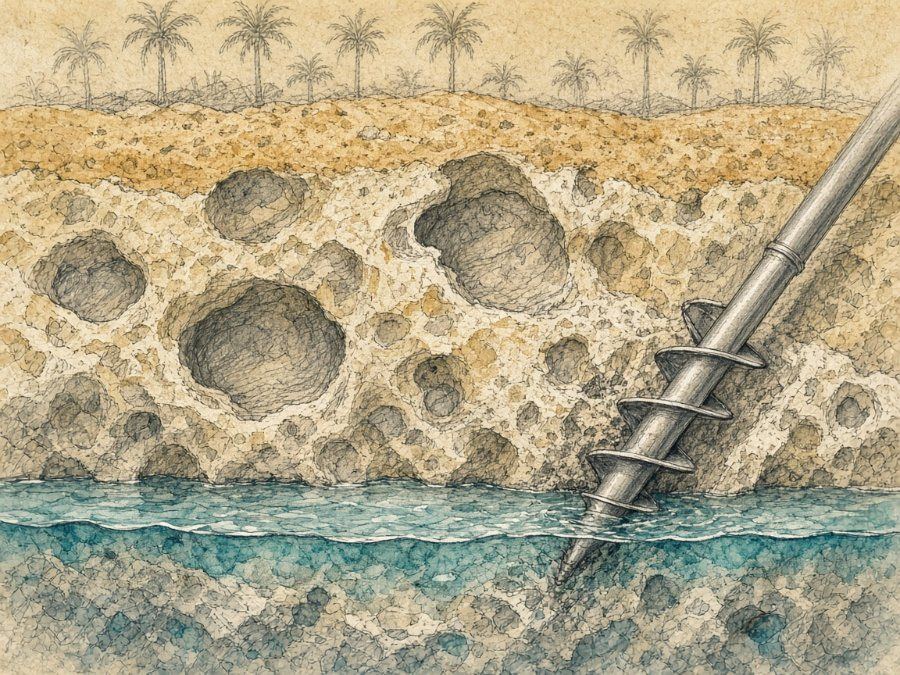
What is under the ground in Miami?
Mostly limestone that forms the Biscayne aquifer, a highly permeable aquifer at shallow depth that is the main source of water for Miami-Dade and Broward counties. According to the USGS, its upper part includes the Miami Limestone (also called the Miami Oolite), and its thickest unit is the Fort Thompson Formation. The aquifer is unconfined, which means the water table sits within it, often not far below the ground surface.
Why is limestone hard to drill predictably?
Because it changes over short distances. Hard ledges sit next to soft, sandy zones, and the rock is full of holes, from small vugs to larger cavities. The boring logs help flag where the rock changes, but ground between borings is interpreted, not seen.
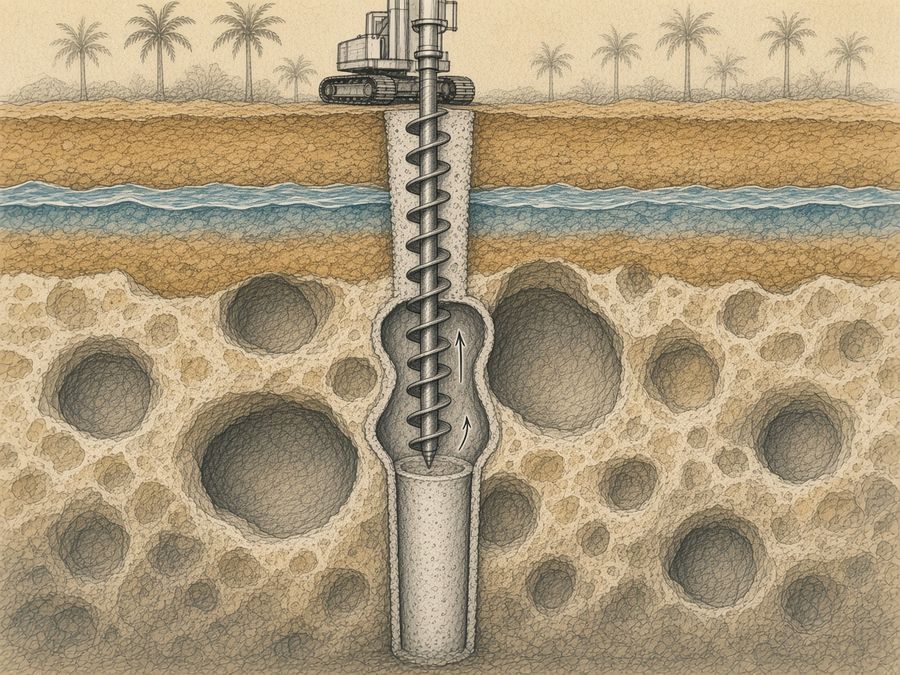
What happens when an auger cast pile meets a void?
Grout flows into it, so the pile can take more grout than its theoretical volume. Recording the grout volume against depth on every pile shows where that happened, and the engineer decides whether any action is needed.
How does a high water table change the work?
The lower part of the hole is below water, so it has to be supported until the concrete or grout is in. On an auger cast pile, the auger supports the hole while drilling, and the grout is pumped through the hollow stem as the auger is withdrawn, filling the hole from the bottom up. Whether that method suits a site depends on the ground, the groundwater and the engineer’s design.
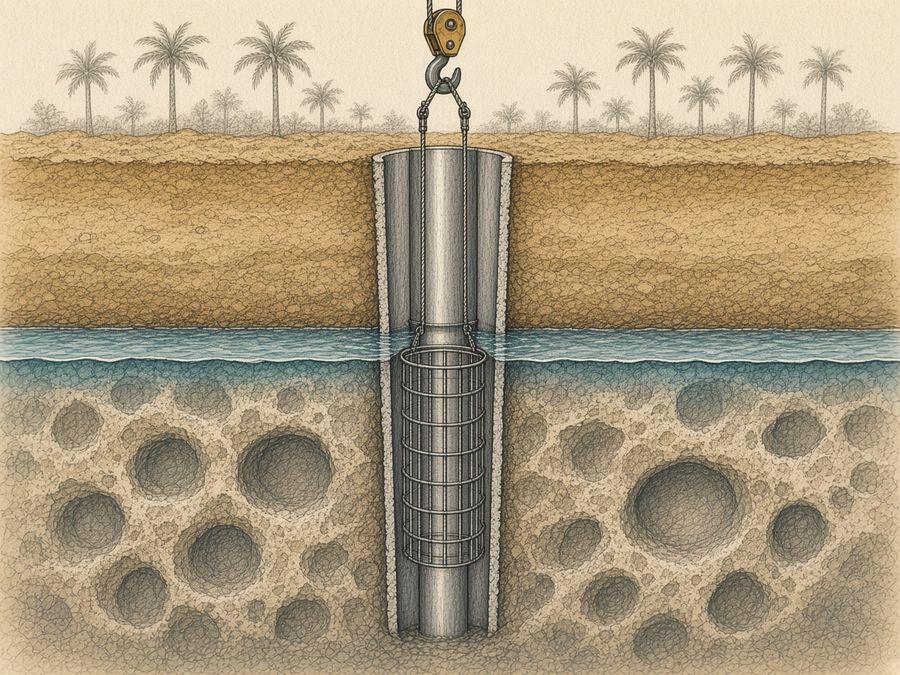
How is a drilled shaft built below the water table?
Crews typically hold the hole open with steel casing, drilling slurry or both. The steel cage is set first, then the concrete is placed through a tremie pipe from the bottom up so it displaces the water or slurry.
None of this replaces the engineer’s design. It is why the soil report matters, and why a drilling crew reads it before the rig shows up.
Frequently asked questions
Is Miami built on coral rock?
The local rock is often called coral rock, but much of the Miami Limestone near the surface is oolitic limestone, made of small rounded grains called ooids rather than coral reef.
Can auger cast piles be used below the water table?
Often, yes. The grout is pumped through the hollow stem and fills the hole from the bottom up as the auger is withdrawn. Whether they suit a particular site is the engineer’s decision.
Why does grout volume matter in limestone?
Grout that flows into voids does not stay in the pile. Comparing the grout pumped with the theoretical pile volume shows where the ground took extra, and the engineer reviews it.
Who decides how a foundation is built in this ground?
The geotechnical engineer and the structural engineer of record, based on the site investigation. The drilling contractor follows the plans and specifications.
Sources
General information, not engineering advice. Your engineer of record decides the foundation design.