
Field notes · Before you drill
What a soil boring tells you
A soil boring tells you what is under a site, layer by layer: the soil and rock types, how dense or hard each layer is, and where groundwater was found. The geotechnical engineer uses the borings, samples and lab tests to recommend the foundation type and how deep it needs to go.
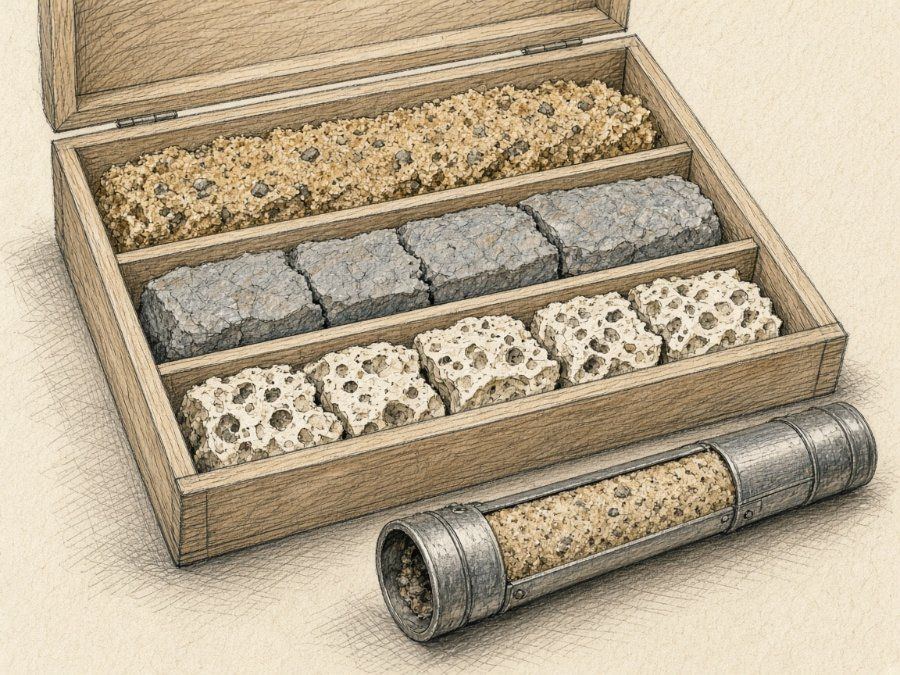
What is a soil boring?
A soil boring is a hole drilled by a drill rig to recover samples and test the ground at set depth intervals. It is the core of a geotechnical site investigation, which the geotechnical engineer plans and interprets.
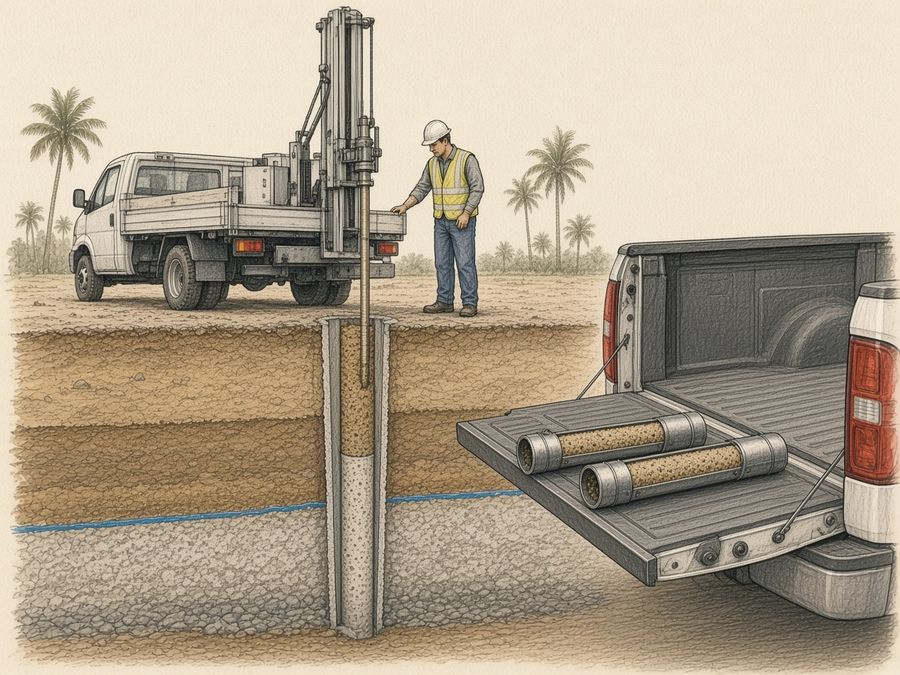
What is the Standard Penetration Test?
The Standard Penetration Test (SPT, ASTM D1586) drives a split-barrel sampler into the bottom of the boring and counts how hard it is to drive. A 140-lb hammer falls 30 inches onto the rods, and the blows are counted for each of three 6-inch increments. The blows for the second and third increments added together are the N-value.
A higher N-value generally means denser sand or stiffer clay. The sampler also brings up soil to describe and test in the lab. Because hammers deliver different energy, engineers often adjust N-values before using them in design. Where the boring reaches rock, it may be continued by coring.
What is on a boring log?
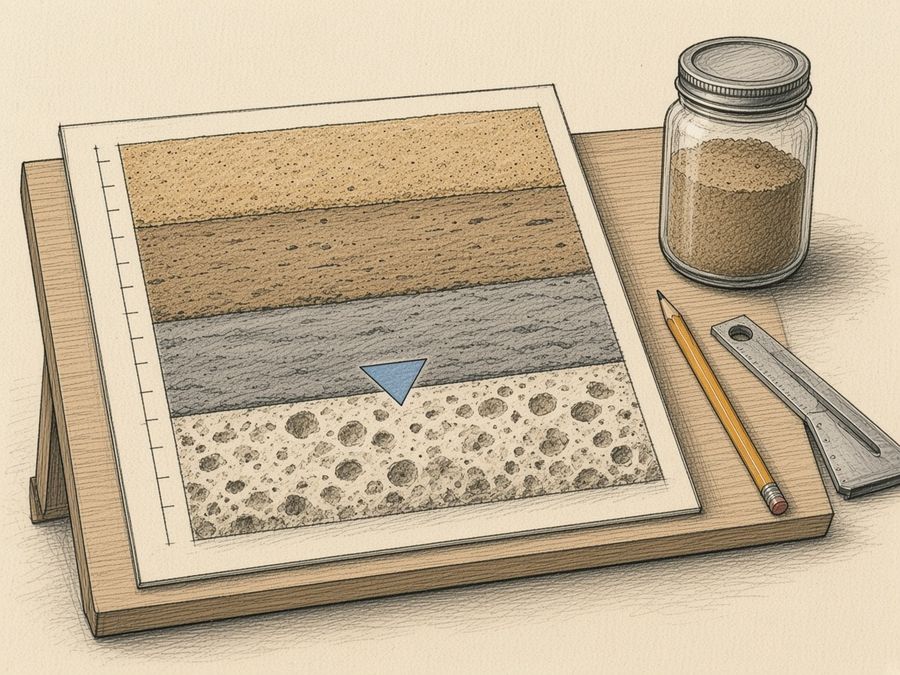
A boring log is a column for each boring that records what was found with depth. It typically shows the soil or rock description and classification, the SPT blow counts and N-values, sample numbers and recovery, and the depth where groundwater was encountered. Notes such as rods dropping or drilling fluid being lost can point to soft zones or voids.
How does an engineer use the borings?
The engineer uses them to choose the foundation type, estimate its capacity and set the pile or shaft length. A boring describes only the ground at that spot, so conditions between borings are interpreted, and the number and depth of borings are chosen by the engineer for the site and the structure.
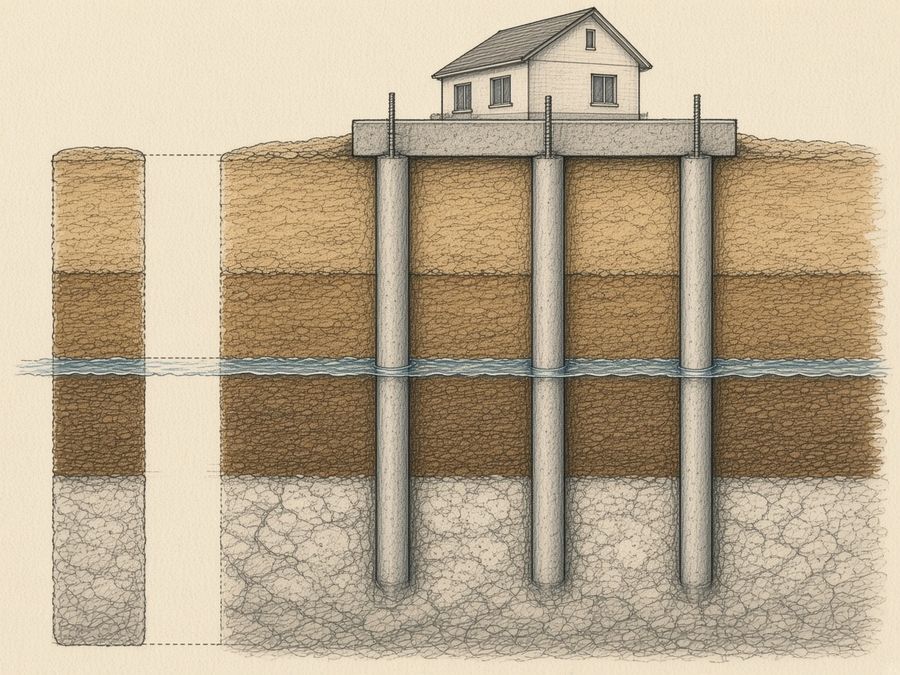
The logs also tell the drilling crew what to expect: loose sand that may cave, hard layers, voids or water.
What should you send to get a drilling quote?
Send the foundation plans, the pile schedule and the geotechnical report with its boring logs. Those set the number, diameter and depth of the piles and show the ground they will be drilled through.
Frequently asked questions
What does an N-value mean?
It is the number of hammer blows needed to drive the SPT sampler over the second and third 6-inch increments. Higher values generally mean denser or stiffer soil, and engineers often correct them for hammer energy before design.
How many borings does a site need?
There is no single number. The geotechnical engineer sets the number, spacing and depth of borings based on the size of the structure, its loads and how variable the ground is.
Does a boring show the groundwater level?
It records where groundwater was encountered during and after drilling. Groundwater can rise and fall with the seasons, rainfall and tides, so the engineer interprets the reading.
Is a soil boring the same as a percolation test?
No. A percolation test measures how fast water soaks into the ground, usually for drainage design. A soil boring samples and tests the ground with depth for foundation design.
Sources
- ASTM D1586/D1586M: Standard Test Method for Standard Penetration Test (SPT) and Split-Barrel Sampling of Soils
- FHWA GEC No. 5: Geotechnical Site Characterization (FHWA-NHI-16-072)
- ASTM D4633: Standard Test Method for Energy Measurement for Dynamic Penetrometers
General information, not engineering advice. Your engineer of record decides the foundation design.